.avif)
How to Prepare for the Lifestyle Changes That Come With Knee Replacement
Knee replacement surgery, or arthroplasty, is a big decision, but one that is worth it for many people. When one has spent months or years writhing in pain, this surgery can be a turning point. Simple tasks like climbing stairs or getting dressed become difficult, which is why recovery aims at being able to do these things with greater comfort.
The recovery process itself may impact more than your knee. The Cleveland Clinic shares that it typically takes around a year for complete recovery. However, most people are able to resume their former activities within six weeks. Essentially, factors such as activity level before surgery, age, and related health conditions have a role to play.
While you allow your body to heal at its own pace, it’s wise to prepare in advance for the lifestyle changes that will inevitably follow. This guide walks you through four practical ways to get set for lifestyle adjustments that come with knee replacement. They will help you enter recovery with fewer avoidable obstacles.
Make Room for a New Pace Your Body Can Embrace
Any condition that calls for knee replacement surgery may have already made it challenging to walk, exercise, or stand upright for extended time. You must wonder how exactly your activity levels would change post-surgery. The difference is that the post-surgery limitation has a separate cause.
Before surgery, pain and stiffness are usually the reasons behind difficulty moving freely. Once you’re in recovery, the focus shifts towards the goal: to give your knee the time needed to heal. Limited physical movement will support your joints in regaining strength and mobility.
Even if you were not very active before surgery, your routine following it can look unrecognizable. That’s because short walks, periods of rest, and physical therapy may become more deliberate parts of your day. Any fun hobbies you may enjoy, such as gardening or shopping, must be resumed in stages.
Recovery also varies significantly from one person to another. Back in 2024, a report was published based on a study of 231 people who underwent knee replacement for osteoarthritis. It was found that patients with an imbalance in natural knee alignment reported more problems and poorer function four years later.
This isn’t to scare you, but only to imply that recovery is personal. You don’t have to test yourself against someone else’s timeline.
Tips for Easier Adjustment
- Give yourself and your care team a clearer point for recovery by noting what’s holding you back before surgery, be it pain, reduced endurance, or weakness.
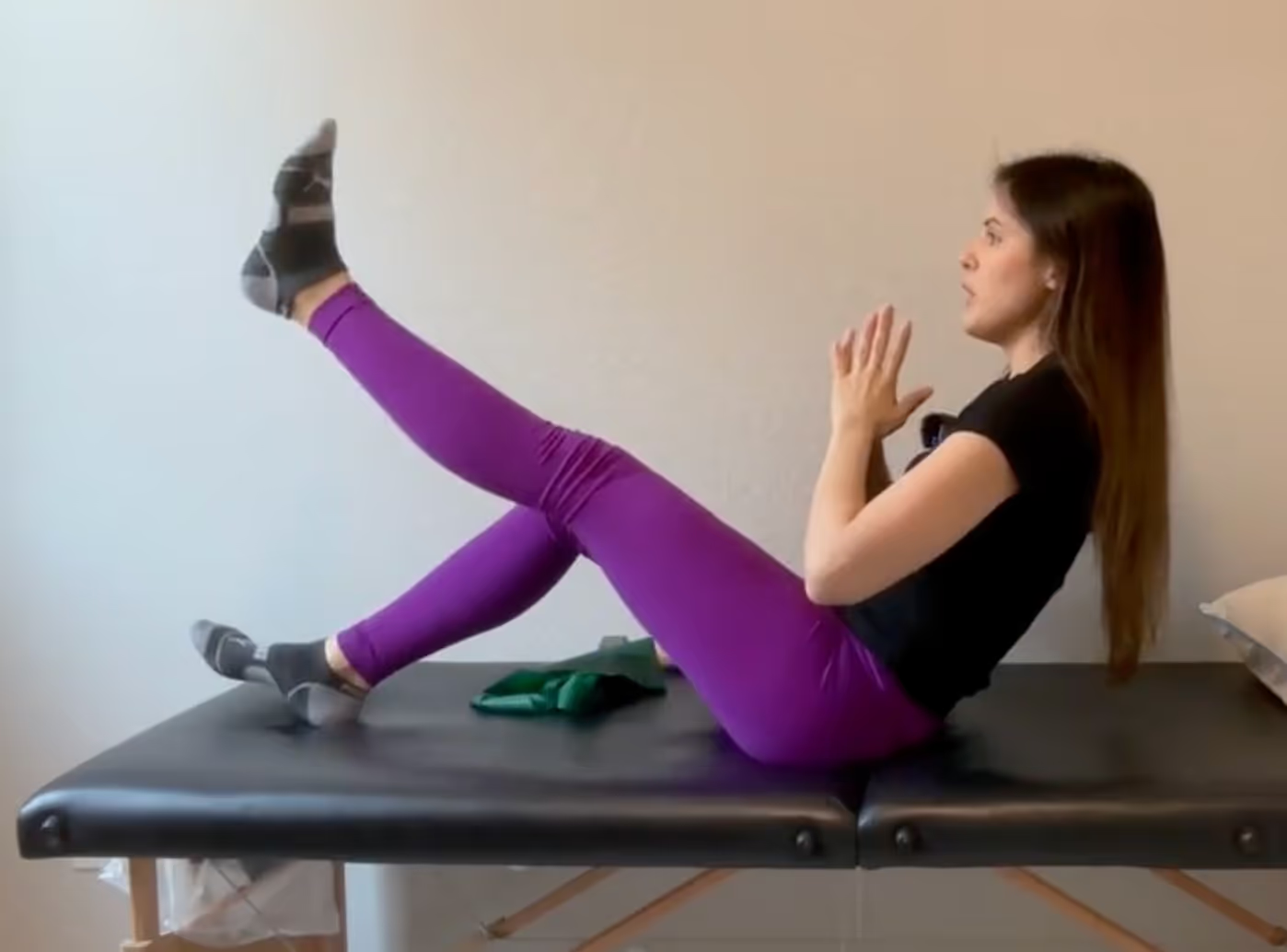
- After consulting with your physical therapist or surgeon, incorporate pre-surgery exercises into your daily routine.
- Think of ways to simplify activities you value, such as asking for assistance with carrying shopping bags or doing shorter gardening sessions.
- Set aside time every day for walking, exercise, and sufficient rest.
- Expect progress, but don’t be aggressive about the pace, allowing your body the time it needs to heal.
Gather Your Support Circle Before Surgery
Family and friends belong to your immediate support circle, but that should not be all. Your surgeon, therapist, nurses, and other healthcare professionals may play different roles in aiding your recovery.
Having the right people identified before surgery can make it easier to know who to turn to for transportation, rehabilitation, and questions about recovery. The World Health Organization (WHO) reported in 2024 that 2.4 billion people worldwide were living with a health condition that could benefit from rehabilitation.
Moreover, rehabilitation is described as a way to help people regain and maintain independence in daily life. That means your support system must be stronger than what allows you to get through the first few days post-surgery. So, a family member may handle meals and errands, while a registered nurse (RN) helps you understand the surgeon's instructions and provides important bedside care.
Depending on their education and training, nursing professionals can take on additional responsibilities. For instance, a nurse practitioner (NP) may pursue a Master’s of Science in Nursing (MSN) to prepare for more advanced roles. Wilkes University lists the three main concentrations as family nursing, adult-gerontology primary care, and psychiatric or mental health nursing.
To continue working, many nurses explore online RN to MSN NP programs for flexibility. In your case, the value ultimately lies in the care. A team that includes nurses with different levels of training can bring complementary skills to the recovery process, from patient education to advanced assessment and care management.
Your personal support network should also be planned thoughtfully. Before surgery, decide who will drive you to appointments, prepare meals, handle household tasks, and help you communicate with your healthcare team. This isn’t about dependence, but about having enough support so rehabilitation gets the attention it deserves.
Tips for Easier Adjustment
- Keep all the necessary healthcare addresses and contacts handy, from your surgeon’s to nurses’ and other relevant care providers’.
- Arrange practical help for grocery shopping, household chores, and meal preparation before surgery.
- Give each person a clear role instead of leaving the arrangement vague and chaotic.
- Have a backup plan in the form of another individual who can extend essential help if your primary support person is unavailable.
Make Your Home Work for Your Changing Mobility
Once your knee replacement surgery is done, your home will also be a part of the lifestyle changes you may experience. For instance, it may be particularly challenging to get into the shower, walk between rooms, or reach into a low cabinet when you’re using a walker or other mobility aid.
According to the 2024 American Joint Replacement Registry report, which analyzed over 3.7 million hip and knee replacement procedures, preoperative optimization and care coordination are a must. Plus, it said that most patients can safely transition back to their home environment.
Since modifications are needed until complete recovery, don’t stress about making your home permanently accessible. Just remove obstacles that make your temporary mobility limitations harder to manage. For instance, if you usually store dishes in a low cabinet, move them to waist-level shelves to avoid bending too much.
Think through the activities you perform daily and prepare the spaces around them pre-surgery. Small changes made while you’re still mobile are easier than trying to shuffle your home when movement is temporarily restricted.
Tips for Easier Adjustment
- Clear the main walking paths of loose rugs, electrical cords, small furniture, and other obstacles.
- Place everyday-use items, such as medications, toiletries, clothing, dishes, etc., within easy reach to avoid unnecessary stretching or bending.
- If your care team recommends equipment like a shower chair, grab bars, or a raised toilet seat, arrange them before surgery.
- Consider where you will sleep, bathe, prepare food, and rest, especially if stairs will be difficult to climb initially.
Prepare for a New Pattern of Rest
Sleep may not look quite the same during the early stages of knee replacement recovery. You may experience swelling, discomfort, as well as limitations to your mobility. These can make it harder to find a comfortable position or get up when you need to.
If you normally sleep without thinking about your position or nighttime routine, even such temporary changes may require a lot of planning. This is especially challenging for older adults who already experience lighter sleep.
Sleep psychologist Shelby Harris told CBS Mornings Plus that “As we start to move into our 60s, 70s, you have more issues with the depth of your sleep, so your sleep is just lighter in general.”
No matter your age, it is worth preparing your sleeping environment before surgery. While it isn’t possible to remove every distraction, you can make it easier to return to sleep and move around when you do wake up. Harris also recommended basic sleep hygiene measures such as keeping the bedroom dark, cool, and quiet while also maintaining a consistent routine.
Plan out what you want your nighttime schedule to look like post-surgery. If getting out of bed requires more effort, ensure you have a clear path to the bathroom, with adequate lighting. Keep frequently used items nearby and ask your healthcare team whether changes are needed to your sleeping position. They may even recommend aids like a specialized pillow that offers greater support.
Tips for Easier Adjustment
- Make sure your sleeping area (bed) is easy to get in and out of with enough space to safely move around it.
- Maintain a cool, dark, and quiet bedroom atmosphere along with a fixed bedtime routine.
- Clear the route to the bathroom and add a night light that enables you to move around safely.
- Find out from your surgical or rehabilitation team whether you will need to adjust how you sleep or use specific supports while your knee heals.
FAQs
What should I do before knee replacement surgery to make recovery easier?
Prepare your home, arrange transportation and practical help, identify your healthcare contacts, organize your sleeping area, and discuss exercise expectations with your team. If you plan these details, it will reduce difficulties at the time mobility is temporarily restricted post-surgery.
How long does it take to return to normal activities after knee replacement?
Recovery varies based on factors such as your activity level before surgery, age, overall health, and progress during rehabilitation. Many people resume previous activities within about six weeks, while complete recovery can take up to a year or longer. Your care team can provide a more personalized timeline.
What lifestyle changes should I expect after knee replacement?
You may temporarily need to modify physical activity, depend on others for certain tasks, and adjust your sleep routine. These changes generally support a gradual return to independence rather than representing permanent restrictions on how you live.
Prepare for These Lifestyle Changes Before Knee Replacement Surgery
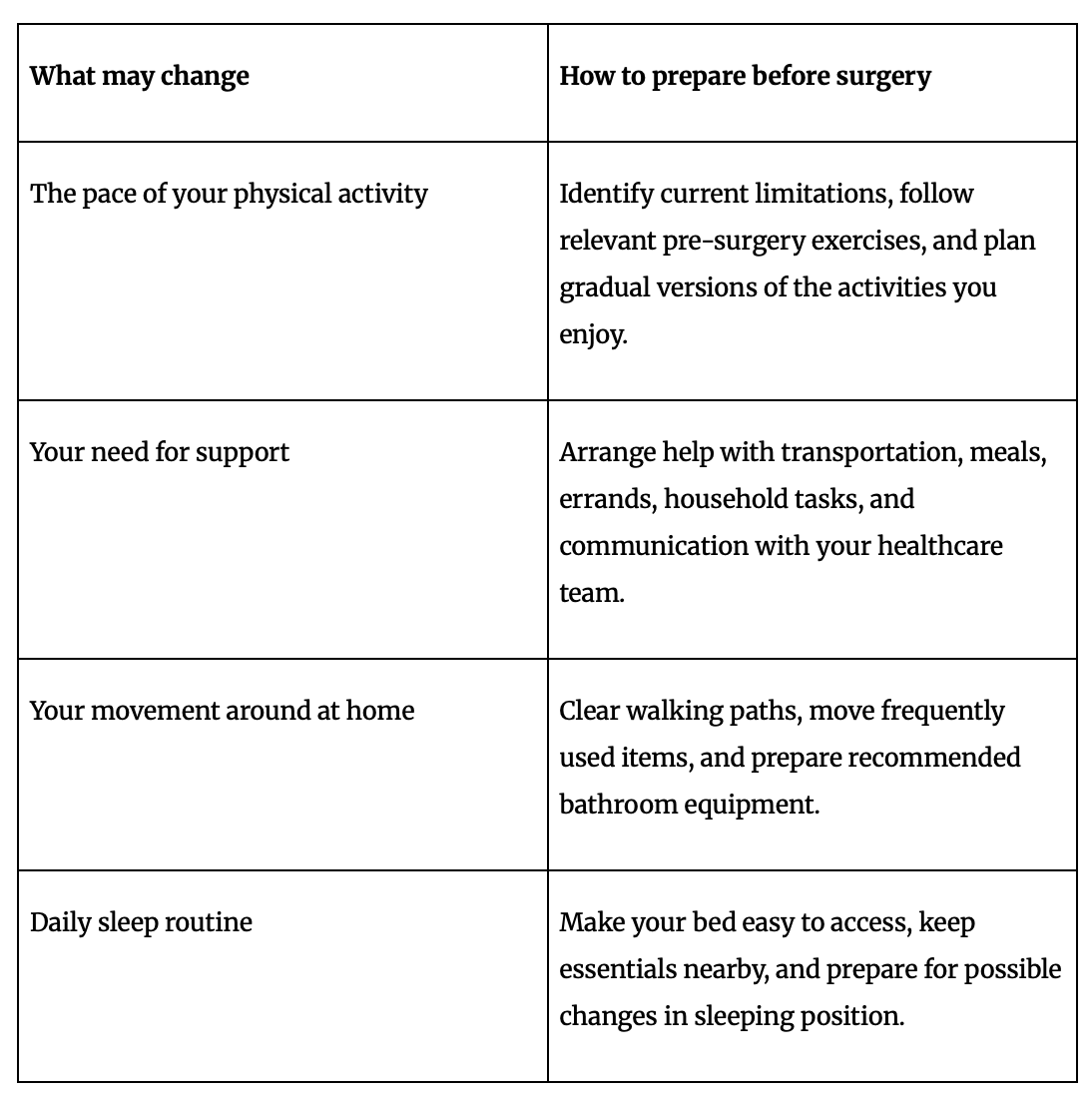
With all that being said, you don’t need to follow a rigid checklist. Think of your time before surgery as an opportunity to look at the parts of your daily life that need some adjustments.
Preparation should touch upon every lifestyle change that is likely to occur. Sleep, for one, is not simply a matter of inconvenience. A 2025 analysis of 81 studies involving around 290,000 people with osteoarthritis found that sleep disorders were common. They were associated with greater pain, fatigue, and disability.
While every part of recovery may not be under your control, you can still reduce the number of things to figure out while healing. The more intentional your preparation, the more you can devote your time and attention towards what matters most: regaining your mobility.


.jpg)